Turmeric and Inflammation: What the Science Actually Shows
TLDR
Curcumin, the active compound in turmeric, has been shown in multiple meta-analyses to significantly reduce key inflammatory markers — including CRP, TNF-α, and IL-6. However, raw turmeric used in cooking contains very little curcumin by weight, and curcumin has poor bioavailability on its own. When it comes to turmeric and inflammation, the evidence is promising but not conclusive.
What Is Curcumin and Why Does It Matter?
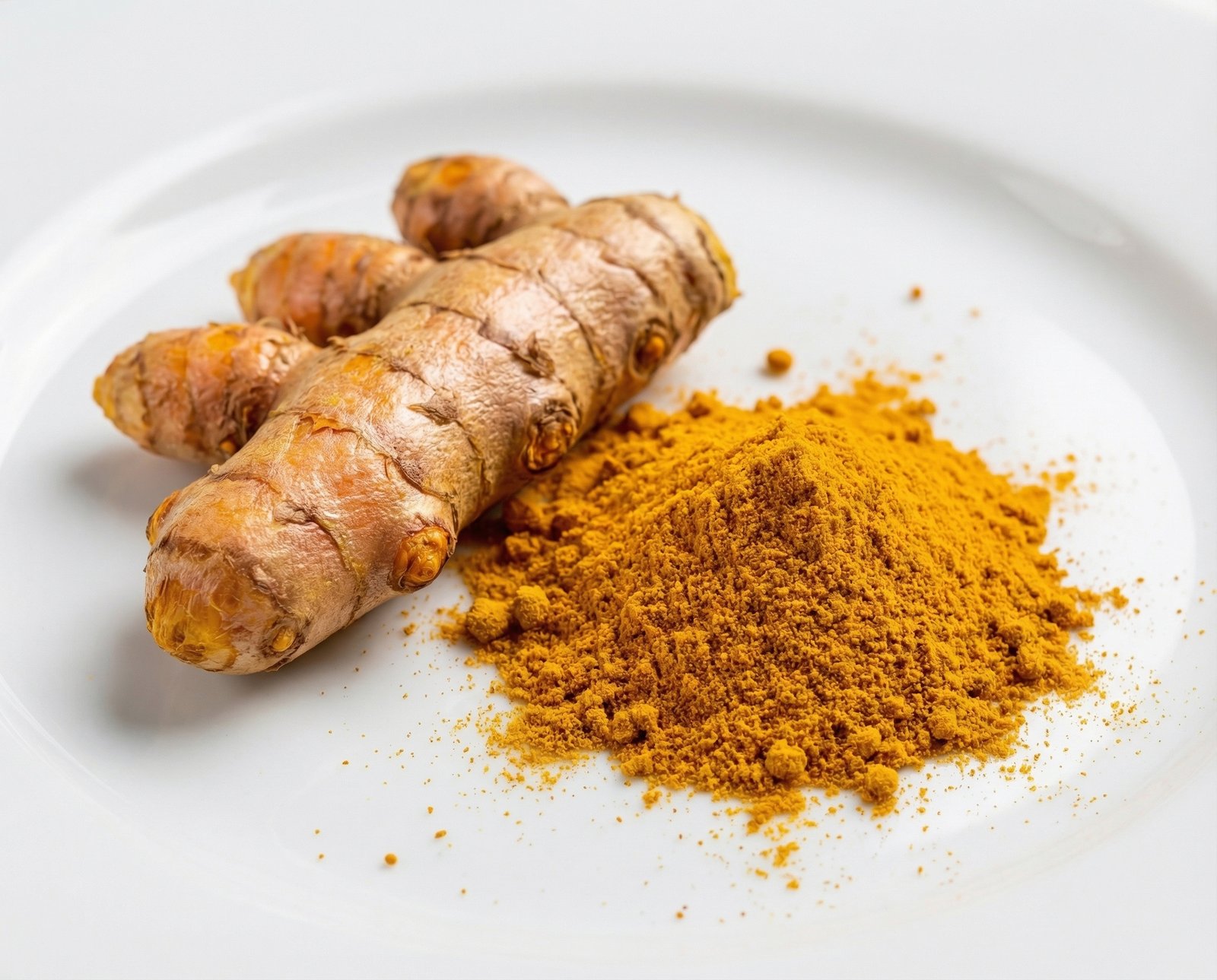
Turmeric (Curcuma longa) is a root spice used for centuries in Ayurvedic medicine. Its primary active compound is curcumin — a polyphenol responsible for turmeric’s distinctive yellow color and most of its studied health effects.
Curcumin works through multiple pathways. It inhibits NF-κB, a protein complex that plays a central role in regulating the immune response and inflammation. It also suppresses COX-2 enzymes — the same enzymes targeted by common anti-inflammatory medications like ibuprofen — and reduces levels of pro-inflammatory cytokines including TNF-α and IL-6.
What the Research Actually Shows
The research base on curcumin is substantial. A 2023 systematic review and meta-analysis by Dehzad et al., published in the journal Cytokine and covering 66 randomized controlled trials, found that turmeric and curcumin supplementation significantly reduced levels of CRP, TNF-α, and IL-6 — three of the most widely used markers of systemic inflammation. (PMID: 36804260)
An umbrella meta-analysis of 10 studies involving 5,870 participants confirmed these findings — with greater anti-inflammatory effects observed specifically in adults over 45. (PMID: 36700039)
A 2024 review published in Nutrients examined 54 separate meta-analyses of curcumin randomized controlled trials. Across these analyses, curcumin consistently reduced CRP in 7 out of 10 meta-analyses, IL-6 in 5 out of 8, and TNF-α in 6 out of 9.
For joint health specifically, a 2024 network meta-analysis covering 17 studies found that all turmeric preparations significantly reduced pain scores in knee osteoarthritis patients — a condition driven in large part by chronic inflammation.
It is worth noting that not all studies agree. A 2019 meta-analysis found that turmeric and curcumin did not significantly reduce inflammatory markers across a range of chronic inflammatory diseases — highlighting the high variability between studies in terms of dosage, formulation, and patient population.
The Bioavailability Problem
Here is the critical detail that most turmeric articles skip: curcumin has very poor bioavailability. It is poorly absorbed in the gut, rapidly metabolized, and quickly eliminated. This means that eating turmeric in food — even generously — delivers far less curcumin to your bloodstream than the doses used in clinical trials.
The most studied solution is combining curcumin with piperine, a compound found in black pepper. Research shows that piperine can increase curcumin absorption by up to 2,000%. This is why the traditional combination of turmeric and black pepper in many South Asian dishes may be more than coincidence.
Other bioavailability-enhanced formulations — including liposomal curcumin, nanoparticle preparations, and phospholipid complexes — are increasingly used in research and are available as supplements.
What This Means for Your Kitchen
You do not need to take supplements to benefit from turmeric. Adding it regularly to your cooking — combined with black pepper and a healthy fat like olive oil — is a sensible, evidence-informed practice. It will not replace medical treatment, but it is a low-risk, potentially beneficial addition to an anti-inflammatory diet.
Practical ways to use turmeric daily:
- Add ½ teaspoon to scrambled eggs with a pinch of black pepper
- Stir into soups, lentils, or roasted vegetables
- Use in salad dressings with olive oil and black pepper
- Add to smoothies with ginger and a small amount of fat
FAQ
Does turmeric reduce inflammation? Research suggests curcumin, turmeric’s active compound, can reduce inflammatory markers such as CRP, TNF-α, and IL-6 in clinical settings. Multiple meta-analyses support this effect, though results vary depending on dosage and formulation.
How much turmeric should I eat per day? There is no established dietary recommendation. Most clinical studies use curcumin supplements ranging from 500 to 2,000 mg per day — far more than you would get from cooking. For culinary use, ½ to 1 teaspoon of turmeric per day is a reasonable starting point.
Should I take turmeric with black pepper? Yes. Piperine in black pepper significantly increases curcumin absorption. Most experts recommend combining the two.
Is turmeric safe? Multiple human trials using up to 8,000 mg of curcumin per day for three months found no toxicity. Culinary amounts are considered safe for most adults. If you take blood thinners or have gallbladder issues, consult your doctor before using high-dose curcumin supplements.
Can turmeric replace anti-inflammatory medication? No. Turmeric is a dietary ingredient, not a medication. It should not replace prescribed treatments. Always consult your healthcare provider.
Disclaimer
This article is for informational purposes only and does not constitute medical advice. Always consult a qualified healthcare professional before making changes to your diet or supplement routine.
Sources
Dehzad MJ, et al. Antioxidant and anti-inflammatory effects of curcumin/turmeric supplementation in adults: A GRADE-assessed systematic review and meta-analysis of randomized controlled trials. Cytokine. 2023. PMID: 36804260
Naghsh N, et al. Profiling Inflammatory Biomarkers following Curcumin Supplementation: An Umbrella Meta-Analysis of Randomized Clinical Trials. Evid Based Complement Alternat Med. 2023. PMID: 36700039