What Is an Anti-Inflammatory Diet? A Science-Based Guide
TLDR
An anti-inflammatory diet is not a strict diet plan but a style of eating built around whole, minimally processed foods that reduce chronic inflammation in the body. It emphasizes vegetables, fruits, fatty fish, legumes, whole grains, healthy fats like extra virgin olive oil, and spices like turmeric and ginger. The Mediterranean diet is the closest real-world model of what is an anti-inflammatory diet, supported by decades of clinical research. What you eat every day either feeds inflammation or fights it.
What Is Inflammation — and Why Does It Matter?
Inflammation is your body’s natural defense response. When a toxin, injury, or foreign body enters the system, the immune system mounts an attack — and that attack is inflammation. In the short term, this is protective. A sprained ankle swells. A cut gets red. That is acute inflammation doing its job.
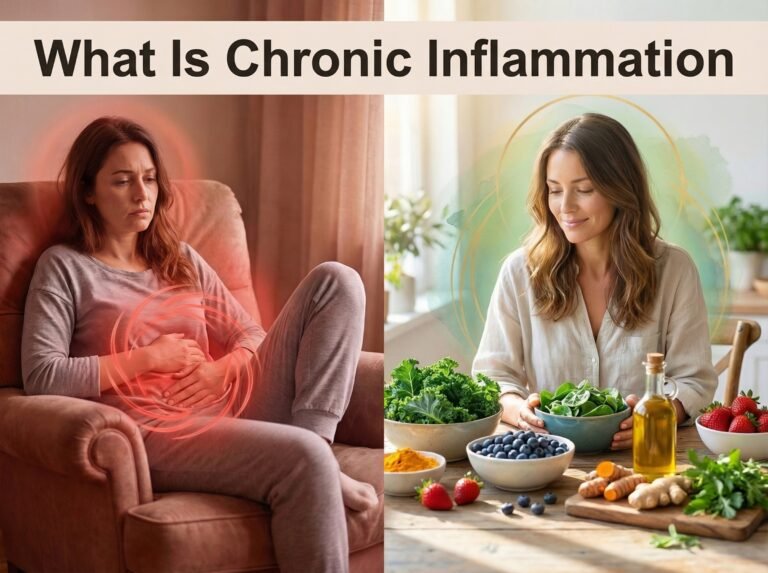
The problem begins when inflammation becomes chronic — a low-grade, persistent state of immune activation that the body can no longer turn off. Chronic inflammation is linked to heart disease, type 2 diabetes, Alzheimer’s disease, autoimmune conditions, and certain cancers. What makes it particularly difficult to address is that its symptoms are often invisible or misattributed: persistent fatigue, body aches, brain fog, migraines, digestive issues, and frequent allergic reactions can all be signs of chronic systemic inflammation.
Diet is one of the most powerful and modifiable drivers of chronic inflammation. Highly processed foods, refined sugars, industrial seed oils, and excess alcohol are among the strongest dietary triggers. Whole foods rich in antioxidants, fiber, and omega-3 fatty acids work in the opposite direction — they actively suppress inflammatory pathways.
What Is an Anti-Inflammatory Diet?
An anti-inflammatory diet is not a prescription or a meal plan with strict rules. It is, as registered dietitian Julia Zimpano of the Cleveland Clinic describes it, “a style of eating” — one centered on whole, one-ingredient foods that you combine into meals.
Think of it this way: an apple is one ingredient. Avocado is one ingredient. Chicken, olive oil, lentils, salmon — all one-ingredient foods. When you build meals from these building blocks, the result is naturally anti-inflammatory, even if the dish itself has many components. A chicken vegetable soup made entirely from whole ingredients is an anti-inflammatory meal. A frozen dinner with fifteen additives is not.
The core principles:
Emphasize: vegetables and leafy greens, fruits especially berries, fatty fish (salmon, sardines, mackerel), legumes (beans, lentils, chickpeas), whole grains (buckwheat, black rice, oats, barley), extra virgin olive oil, nuts and seeds, herbs and spices.
Minimize: ultra-processed foods, refined sugars and sugary beverages, refined grains (white bread, white rice), processed meats, industrial vegetable oils high in omega-6.
The closest dietary model with the strongest research support is the Mediterranean diet. It is not the only version of anti-inflammatory eating, but it is the best-studied, and its foundation — olive oil, vegetables, fish, legumes, and whole grains — maps almost perfectly onto anti-inflammatory principles.
The Science Behind It: What Research Actually Shows
The connection between diet and inflammation is not theoretical. It is documented across thousands of peer-reviewed studies.
Omega-3 fatty acids are among the most researched anti-inflammatory compounds in food. Found primarily in fatty fish, walnuts, and flaxseed, omega-3s — specifically EPA and DHA — directly suppress inflammatory signaling molecules including prostaglandins, cytokines, and leukotrienes. Multiple meta-analyses confirm that regular omega-3 consumption reduces blood levels of CRP (C-reactive protein) and TNF-alpha, two of the most widely used markers of systemic inflammation.
Polyphenols are plant compounds found in berries, dark leafy greens, extra virgin olive oil, legumes, whole grains, green tea, and spices. They act on multiple inflammatory pathways simultaneously. Oleocanthal, a polyphenol in extra virgin olive oil, inhibits the same COX enzymes targeted by ibuprofen — not at the same strength, but consistently and without side effects, working in the background over time.
Dietary fiber feeds the gut microbiome, which plays a central role in regulating immune function. When gut bacteria ferment fiber, they produce short-chain fatty acids — particularly butyrate — that strengthen the gut barrier and reduce systemic inflammation. A compromised gut barrier, sometimes called “leaky gut,” allows bacterial fragments to enter the bloodstream and trigger chronic immune activation.
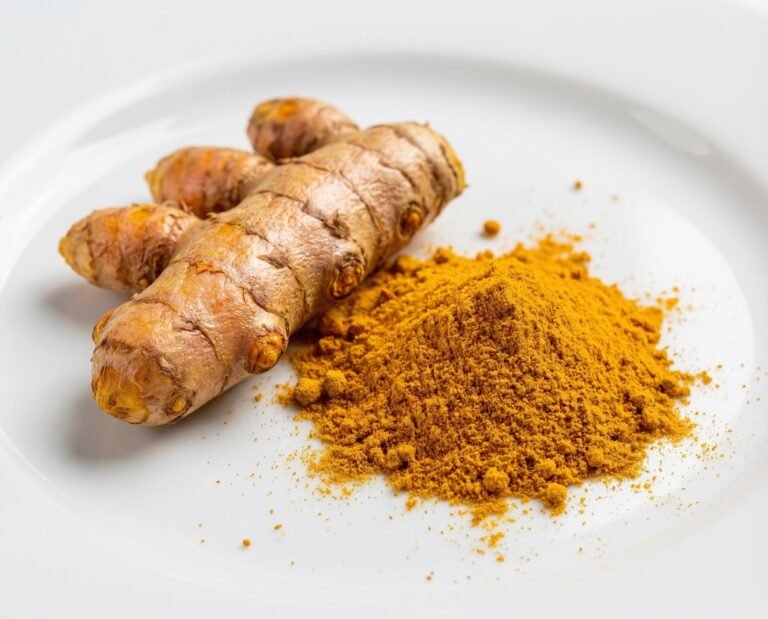
Curcumin, the active compound in turmeric, has been shown in a 2023 meta-analysis of 66 randomized controlled trials to significantly reduce CRP, TNF-alpha, and IL-6 — the same inflammatory markers used in clinical diagnostics. Bioavailability is limited when turmeric is consumed alone, but combining it with black pepper increases absorption by up to 2,000%.
Broccoli sprouts deserve special mention. A clinical trial found that consuming just 30 grams of fresh broccoli sprouts daily for 10 weeks reduced inflammatory markers including IL-6 and CRP by up to 59%. (Lopez-Chillon et al., 2018, PMID: 29573889) The active compound, sulforaphane, activates a cellular pathway called Nrf2 — the body’s master regulator of detoxification and antioxidant defense.
The Top Anti-Inflammatory Foods to Eat Every Day
You do not need to overhaul your entire diet. Research consistently shows that small, consistent daily habits compound into measurable reductions in inflammation over weeks and months.
Berries — One to two cups per day of blackberries, blueberries, or blackcurrants delivers anthocyanins linked to better cholesterol, healthier blood vessels, and lower cardiovascular risk. Frozen berries work just as well as fresh.
Dark leafy greens — Spinach, kale, chard, and rocket provide fiber, folate, vitamin K, and carotenoids like lutein that protect against oxidative stress. One portion daily (approximately 80 grams) has been linked to slower cognitive decline equivalent to being 11 years younger neurologically. (Morris et al., Neurology, 2018, PMID: 29263222)
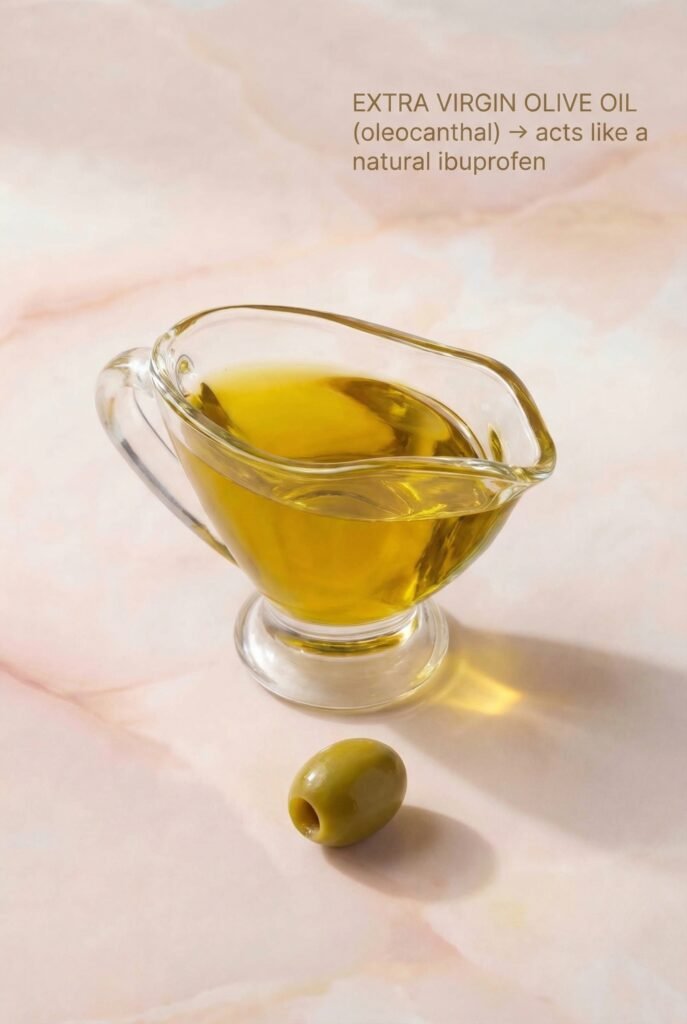
Extra virgin olive oil — Two to three tablespoons daily of cold-pressed, high-polyphenol olive oil provides oleocanthal and oleuropein. A quality bottle should have a peppery bite at the back of the throat — that is the polyphenol content you can taste. Look for a harvest date and aim to use within one year.
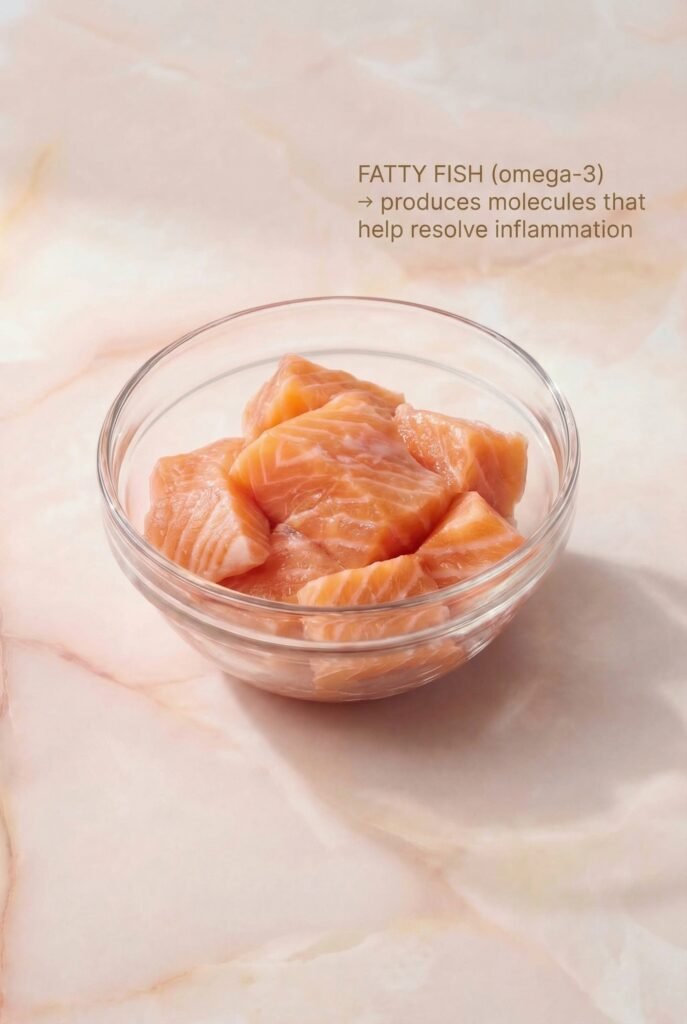
Fatty fish — Salmon, sardines, and mackerel two to three times per week provide EPA and DHA omega-3s directly, without the conversion inefficiency of plant-based sources.
Legumes — Three to four heaped tablespoons of cooked beans or lentils daily feeds gut bacteria and keeps blood sugar stable — both critical for keeping inflammation in check.
Nuts and seeds — A small handful daily (approximately 28 grams) of mixed nuts is linked to lower CRP, better cholesterol, and a 19% lower risk of heart disease. (Aune et al., BMC Medicine, 2016, PMID: 27916000) Walnuts are particularly high in plant-based omega-3s. Ground flaxseed, sesame (or tahini), and hemp seeds each contribute unique anti-inflammatory compounds.
Turmeric and ginger — A teaspoon of turmeric with black pepper and a thumb of fresh ginger (or a teaspoon of powder) daily adds curcumin and gingerols — both clinically documented to reduce inflammatory markers.
Green tea or matcha — Rich in EGCG (epigallocatechin gallate), shown in multiple trials to reduce inflammation and support cardiovascular function. Use water at 80°C, not boiling, to preserve the delicate polyphenols.
How to Start: A Practical First Step
The most effective first move is not to add new foods — it is to identify and reduce the most inflammatory items currently in your diet.

Look at what you eat over a typical week. Where are the highly processed foods? The sugary beverages? The refined grains? These are the items most directly linked to elevated inflammatory markers. Reducing them — even gradually — creates space for anti-inflammatory foods to do their work.
A simple daily checklist used by many practitioners: BBGs — Beans, Berries, Greens, Seeds and nuts. Ask yourself at the end of each day: did I have all four? You do not need them all at every meal. Woven consistently through the day, these four categories cover most of the anti-inflammatory bases.
For anyone with suspected food sensitivities — where specific foods may be triggering personal inflammatory responses — an elimination diet under the guidance of a registered dietitian is the most reliable way to identify individual triggers. General anti-inflammatory eating reduces population-level risk; personalized elimination addresses individual biochemistry.
For a full visual walkthrough of what anti-inflammatory eating looks like in practice, watch this video:
FAQ
Is an anti-inflammatory diet the same as the Mediterranean diet? They overlap significantly. The Mediterranean diet is the best-researched dietary pattern for reducing inflammation, and its core components — olive oil, vegetables, legumes, fish, and whole grains — are all foundational anti-inflammatory foods. However, anti-inflammatory eating is broader and can be adapted to many cultural food traditions.
How long does it take to reduce inflammation through diet? Clinical trials show measurable reductions in inflammatory markers like CRP and IL-6 within 4 to 12 weeks of consistent dietary changes. Some studies show improvements in as little as 10 days when highly processed foods are eliminated and whole foods emphasized.
What are the first signs that inflammation is decreasing? Most people report improved energy, better sleep quality, reduced joint stiffness, clearer skin, and improved digestion within the first few weeks. Blood markers like CRP can be tracked through routine lab work if you want objective confirmation.
Can you follow an anti-inflammatory diet if you are vegetarian or vegan? Yes. Plant-based diets can be highly anti-inflammatory when built around legumes, whole grains, vegetables, fruits, nuts, seeds, and quality plant oils. The main consideration is ensuring adequate omega-3 intake — ground flaxseed, chia seeds, walnuts, and algae-based DHA supplements can address this.
Do I need to follow the diet perfectly to see benefits? No. Research consistently shows that consistent incremental improvements in diet quality — not perfection — drive meaningful reductions in chronic inflammation. The goal is a pattern of eating, not a strict protocol. As one principle guides it well: you are not striving for perfection, you are making as educated and strategic choices as possible, day by day.
Disclaimer
This article is for educational purposes only and does not constitute medical advice. The information provided is based on published research and is intended to support general health awareness. If you have a diagnosed medical condition or are taking medication, consult your healthcare provider before making significant dietary changes. Individual responses to dietary interventions vary.
Sources
Dehzad MJ, et al. Antioxidant and anti-inflammatory effects of curcumin/turmeric supplementation in adults. Cytokine. 2023. PMID: 36804260
Naghsh N, et al. Profiling Inflammatory Biomarkers following Curcumin Supplementation. Evid Based Complement Alternat Med. 2023. PMID: 36700039
Lopez-Chillon MT, et al. Effects of long-term consumption of broccoli sprouts on inflammatory markers in overweight subjects. Food Funct. 2018. PMID: 29573889
Morris MC, et al. Nutrients and bioactives in green leafy vegetables and cognitive decline. Neurology. 2018. PMID: 29263222
Aune D, et al. Nut consumption and risk of cardiovascular disease, total cancer, all-cause and cause-specific mortality. BMC Medicine. 2016. PMID: 27916000